Tuesday, February 3, 2009

Commodity Chains and Marketing Strategies

In the excerpt from his book, “Commodity Chains and Marketing Strategies: Nike and the Global Athletic Footwear Industry”, Miguel Korzeniewicz studies the Global Commodity Chain (GCC) of the Nike Corporation. Korzeniewicz begins by describing how GCCs are very useful, especially in highlighting advantageous strategies, which companies apply to increase marginal product along the links of the chain. GCCs are also useful, he continues, for the linking of patterns in “core areas” of the world to countries he refers to as “peripheral”. The patterns he focuses on is the extremely successful marketing sector of Nike and its subsequent consumption in the “core” areas of the world, namely western, developed countries, and its relationship with production patterns in “peripheral” countries, meaning eastern, developing countries. Miguel briefly describes the recent trends in the US athletic shoe market from 1981-1990. The reason for his analysis of the Nike Corporation is in part because of the phenomenal growth in this sector of the economy. Product differentiation, price segregation, and cultural changes (the “fitness boom” of the late seventies and early eighties) all contributed to the incredible expansion. But Miguel contributes this growth to something else, too: “the most fundamental innovation of these enterprises, however, has been the creation of a market, and this has entailed the construction of a convincing world of symbols, ideas, and values harnessing the desires of individuals to the consumption of athletic shoes”. In other words, Nike, and other corporations such as Reebok and Adidas, has formed demand in a specific, and lucrative, area of the economy.
Korzeniewicz continues by stating that “Nike’s rise to prominence has been based on its ability to capture a succession of nodes along the commodity chain, increasing its expertise and control over the critical areas of design, distribution, marketing, and advertising”. Nike’s innovative changes in these areas, Korzeniewicz concludes, contributed to a “fundamental reshaping of production and consumption” which resulted in, ultimately, the transformation of the global commodity chain.
Miguel next assesses Nike’s transformation in two distinct time periods. The first is from 1976 to 1984, a time which he labels as “Marketing as an upgrading strategy.” During these years, Nike made changes in three critical areas of marketing and production. First, Nike capitalized on the “fitness boom” through the implementation of multiple highly visible endorsements. Their first major success was in signing Larry Bird, who ended up on the cover of a 1979 Sports Illustrated wearing Nike shoes. Second, Nike changed distribution norms by signing a deal with Footlocker which created a more reliable and efficient market. Finally, Nike was never a manufacturing company. Nike has always been in the business of marketing, designing, and distribution, while sub-contracting the actual production of their shoes. In this first time period, Nike began to turn to South Korea and Taiwan in hopes of finding cheap labor. Since Nike’s move in the mid-seventies, millions of companies have followed their example.
In the second time period, post-1985, Nike began making huge changes in product design and advertising. In product design, Nike shocked the world by overcoming financial difficulties of the mid-eighties and coming out with the “Air Jordan” line. This line was not only lucrative, but it also was one of the first large-scale endorsements of a professional athlete. The advertising campaigns associated with the new line were also revolutionary; they were post-modern, subtly showing the product while associating it with virtues popular at the time.
Nike’s amazing development over the past 30 years, Korzeniewicz concludes, is due to their changes in domestic marketing and overseas subcontracting. These changes were revolutionary at the time, yet now millions of companies are following Nike’s path. By manipulating the commodity chain of import, distribution, marketing, and advertising, Nike made huge profits and resulted in “uncommon success”. Today, Nike is working on their online resources. Such new developments such as personalized shoe design and online shopping are the next frontiers to be transformed in the pursuit of profit.

Friday, January 30, 2009

How the World Sees American Racism

In researching the post below, I came across a very interesting article from India’s Central Chronicle. This editorial argues for the protection of the rights of untouchables. The writer begins with an explanation of the special rights dalits receive in India’s Constitution under the Scheduled Caste and Scheduled Tribes sections. The article continues to tell the tale of upper-caste Hindus in Chhatarpur pulling a dalit bridegroom from his wedding horse, an extremely insulting action in Indian culture.
The section that interests me, however, is a short two sentances made as a passing comment. “In America,” the author reports, “President Abraham Lincoln had abolished the slavery rule and later, President Kenedy gave the black people equal rights by passing Civil Rights Act. But, racism still prevails there.”
The author simply states this, not as an argument or thesis, but as an accepted fact. Is this one author simply ignorant? Does most of the world believe that racism prevails in America? I adamantly disagree with the author’s statement, but am infuriated with its factual connotation. America today may have some problems with discrimination, but they are isolated and certainly do not prevail.

Problems for ex-Untouchable Christians in India

In post-independence India, caste is a major controversy. Officially, the caste system and all it entails is illegal. However, the Indian government defines “Scheduled Castes” in specific terms and provides for the reservation of seats in government services, schools, and jobs. This is India’s version of Affirmative Action. The term “Scheduled Castes” is actually a grouping of the lowest castes in the hierarchy, and is more commonly referred to as dalits, a derogatory term for these people. The debate surrounding these affirmative-action-type laws are similar to the debate in the United States. People question whether the creation of diverse institutions is worth the lowering of standards. Others claim that standards are met, and people of disadvantaged birth are given opportunities equal to those born to higher caste members.
There is another side to this debate, however, and one not seen in the United States: religion. Caste is a specifically Hindu system. Many dalits convert to Christianity in an attempt to avoid the persecution which comes with the ‘untouchable’ lower caste. Now, Hindu nationalists are fighting to revoke affirmative action privileges of those dalits who converted. The major Hindu nationalist party in India, the Bharatiya Janata Party (BJP), argues that removing the rights of ex-untouchables preserves the purity of the tribal culture from the negative influence of the church. The BJP is supported my millions of Indians nation-wide and has also teamed up with another influential movement, the Sangh Parivar, under the leadership of the Rashtriya Swayamsevak Sangh, another Hindu nationalist group.
In support of this movement, Karia Munda re-released Kartik Oraon’s book Bees Varsh Ki Kaali Raat (A Twenty-Year Black Night), which originally was published in the late 1960s, which condems Christian converts for benefiting from their new religion while their tribes suffered.

Thursday, January 29, 2009

Nuclear Myths

Dan Marino in his “Debunking Nuclear Energy Myths” explores the pro-nuclear propaganda which is resurfacing due to a bill filed recently by Congress. This bill proposes to revive the Philippine Nuclear Power Plant project (PNPP), which includes $1 billion of US aid for the Bataan Plant. The first myth is that nuclear energy is clean. While the nuclear reactor itself is clean, the nuclear fuel cycle, which is necessary for the existence of the nuclear reactor, is not. The cycle is “heavily dependent” on fossil fuels and creates unacceptable amounts of toxic, radioactive waste. Also, when compared to conservation methods (such as compact fluorescent bulbs and improving insulation in buildings), nuclear power’s energy efficiency is extremely low. The second myth is that nuclear energy is inefficient. Marino cites Kristin Shrader-Frechette, who claims that a new nuclear power plant in the western United States is generating electricity at 11 cents per kilowatt-hour, yet the US government calculates the generation of electricity from wind plants at just 3.4 cents per kilowatt-hour. The cost of nuclear plants is high; but the government gives huge subsidies which mask the true cost. The third myth is that using nuclear power is necessary to address climate change. Marino argues that building one expensive nuclear plant is wasteful, because this money could be used to research cheaper, cleaner, safer, and renewable energy. The fourth myth is that nuclear energy will not increase weapons proliferation. Any nuclear plant could either be used as a target for violence or a mask for the creation of nuclear warheads. Both the SUS Office of Technology and the International Atomic Energy Agency agree in rebuking this myth. Finally, Marino claims that nuclear energy is not safe. The entire energy production process is extremely vulnerable to mistakes or deliberate attacks which would result in unprecedented harm.
In today's world, many non-west nations are fighting to obtain rights to build nuclear power plants. These environmental and security concerns should be delt with before adding to the number of unsafe stations all over the world. India has an estimated 100-140 nuclear warheads at its disposal along with its 17 nuclear power plants. People now need to consider whether continuing to build large quantities of nuclear power plants is wise.

Tuesday, January 13, 2009

The Communist Manifesto and Globalization


Do Marx and Engels have a point?
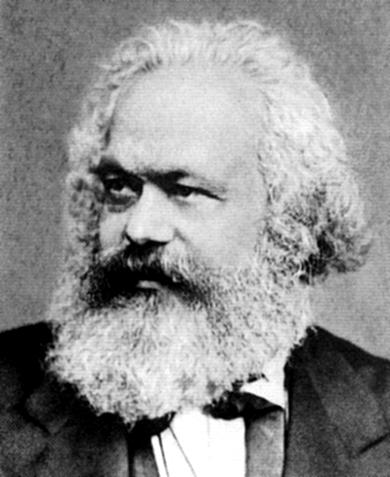
Possibly the most famous discourse against capitalism, "The Manifesto of the Communist Party", written in 1848, warns readers of the power of the bourgeoisie. The Manifesto's thesis is simple: the history of society is a history of class conflict, and the current class conflict is between two distinct groups, the bourgeoisie and the proletariat. In describing the bourgeoisie, however, Marx and Engels make one of the earliest depictions of globalization. The Manifesto claims that the bourgeoisie "has put an end ot all feudal, patriarchal, idyllic relations...and has left no other nexus between man and man than naked self interest, than callous 'cash payment'." Marx and Engles continue on to conclude that the bourgeoisie have stopped religion, enthusiasm, and sentimentialism in favor of "egotistical calculation". Is this not globalization? The success of a person or business in the free market depends on their ability to coldly calculate, to put aside religion or morals in order to make a bigger profit. Marx and Engels describes the increasing influence of the bourgeoisie as spreading across the globe in search of new markets for its products. The result of this, they claim, is "universal inter-dependence of nations...National one-sideness and narrow-mindedness become more and more impossible, and from the numerous national and local literatures, there arises a world literature." Marx and Engels are describing a process that is in full-swing today. Chu Van Cap of the Ho Chi Minh National Political Academy argues the same point in "Marx and Engels on Economic Globalization". However, Cap disagrees with Marx and Engels' final conclusion that globalization is an evil bougeois force, as do I.

Saturday, January 10, 2009


A Presidential Picture
(caption written by Claire Wernecke)

Carter's like "I actually have something to be proud of since I left the White House"GHW Bush is all "Here's the deal, sonny, back in my day we did things this way..."Clinton's like "ahh, the good old days, this is the very same office where Monica and I...."GW Bush (look at his awkward stance!) is like "I'm still the president for another week! look at me! oh, who am I kidding... can I please leave now?!"and Obama's like "S%#t, I've got a lot to do. Get these idiots out of here so I can get to WORK!"
An interesting tidbit on both indian culture and business practices in David Segal's "My Day as a Bollywood Extra". Be sure to check out the video as well.